Moving to Arnhem for work: an honest guide for expats and assignees
Published on: 29 May 2026
Nobody told you it would be Arnhem
When your company told you they were sending you to the Netherlands, you probably pictured Amsterdam. Maybe Rotterdam. Possibly even The Hague. Arnhem was not the city you had in mind.
That is fine. Most people arriving in Arnhem for work feel exactly the same way in the first week — and significantly different by the end of the first month. Arnhem has a way of surprising people. This guide is for anyone who has just found out they are moving here, does not know where to start, and wants an honest picture of what living in Arnhem actually looks like.
Where to stay when you first arrive in Arnhem
First things first: where to stay? if you are arriving in Arnhem for a work assignment of one month or longer, a serviced apartment gives you a stable, functional base from which to find your feet — without the pressure of committing to a long-term lease in a city you are still getting to know. What is a serviced apartment, you might ask?
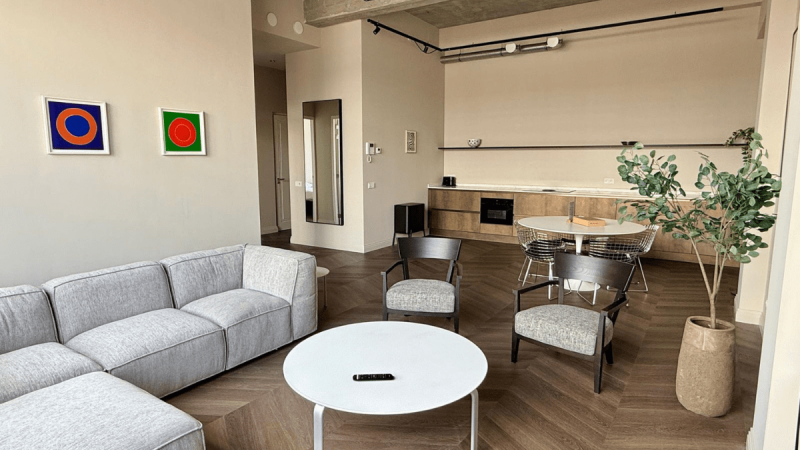
Corporate Housing Factory's The Architect offers fully furnished one-bedroom and two-bedroom apartments in the heart of Arnhem, available from a minimum of 30 nights up to 365 nights. Everything is included — weekly cleaning, private WiFi, a fully equipped kitchen, work from home setup, and a personal meet and greet on arrival. You can register at the address from day one. So it works for both fixed time assignments as for starting your search to a more permanent home to settle down: a serviced apartment is your ideal first touchpoint.
Why the Arnhem-Nijmegen region is worth getting to know
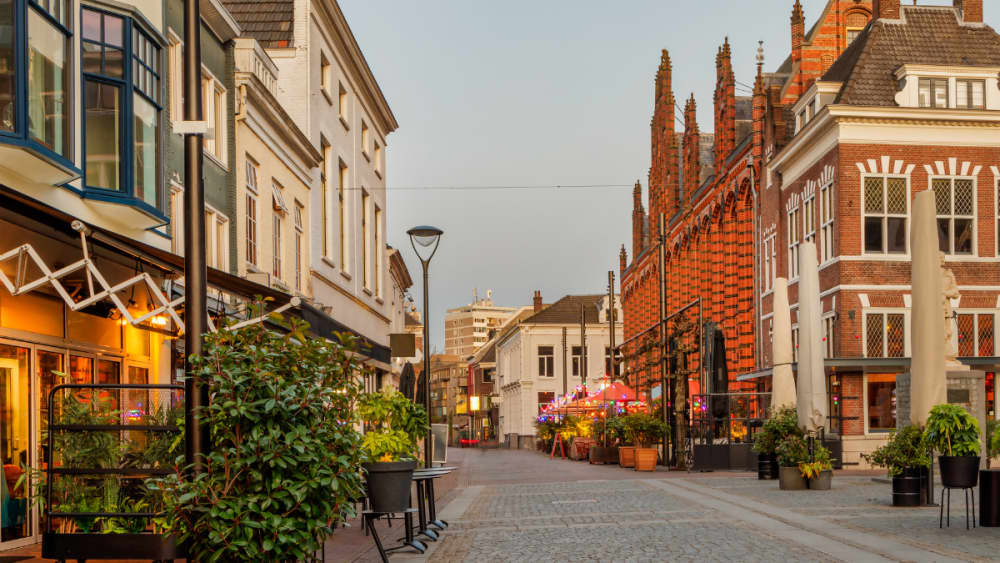
Arnhem sits in the Gelderland province in the east of the Netherlands, about 100 kilometres from Amsterdam and 15 kilometres from the German border. It is not a Randstad city — which means it does not have Amsterdam's housing pressure, Rotterdam's industrial scale, or the relentless pace that comes with living in the western conurbation.
What it does have is a strong regional identity, a surprisingly rich cultural life, and easy access to some of the most beautiful natural landscapes in the Netherlands.
Nijmegen is twenty minutes south by direct train — one of the oldest cities in the country, home to Radboud University and a large, active student and international community. If you are based at an employer in Nijmegen and living in Arnhem, or the other way around, the commute is entirely manageable and most people find the trade-off worth it. The two cities function as a corridor and between them offer more than either does alone.
Commuting, shopping and restaurants
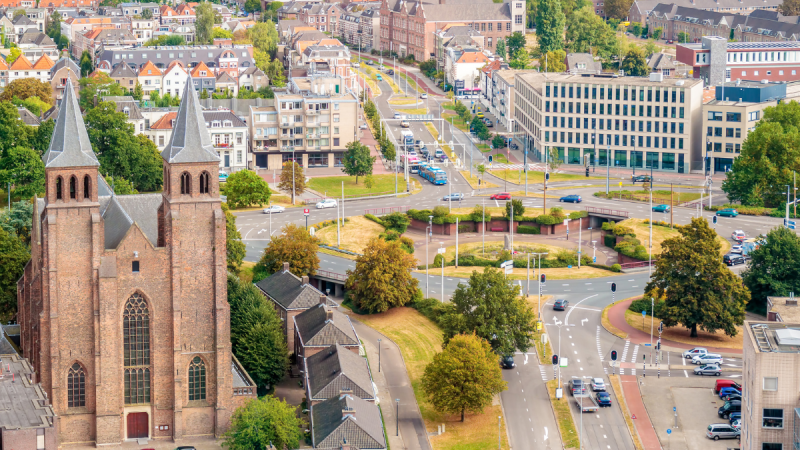
Arnhem is a genuinely walkable city. The centre is compact, easy to navigate, and well-served by cycling infrastructure — which, this being the Netherlands, you will be using within days of arriving whether you planned to or not.
The neighbourhood surrounding The Architect — CHF's serviced apartment building in the heart of the city — is one of the most characterful parts of Arnhem. Historic homes line streets where pavements have given way to façade gardens planted with hollyhocks and lilacs. It feels like a city that takes care of itself.
Day-to-day practicalities are immediately covered. There is an Albert Heijn supermarket on the ground floor of the building itself. Arnhem Central Station is a short walk away. Cafés, restaurants and terraces are within a few minutes on foot — JANS' Food & Wine Bar is 200 metres away, Café Vrijdag is 150 metres, and The Church, a Michelin-recognised restaurant in a converted Lutheran church, is a five-minute walk.
For shopping, Arnhem punches well above its weight — it is the fifth largest shopping city in the Netherlands. The Modekwartier in the Klarendal district is a creative fashion quarter built largely around graduates of ArtEZ University of Arts, with independent concept stores, vintage shops and studios that feel nothing like a generic Dutch high street. The weekly market near the Eusebius Church runs on Fridays and Saturdays with fresh produce, flowers, cheese and bread.
Green space, culture and getting out of the city
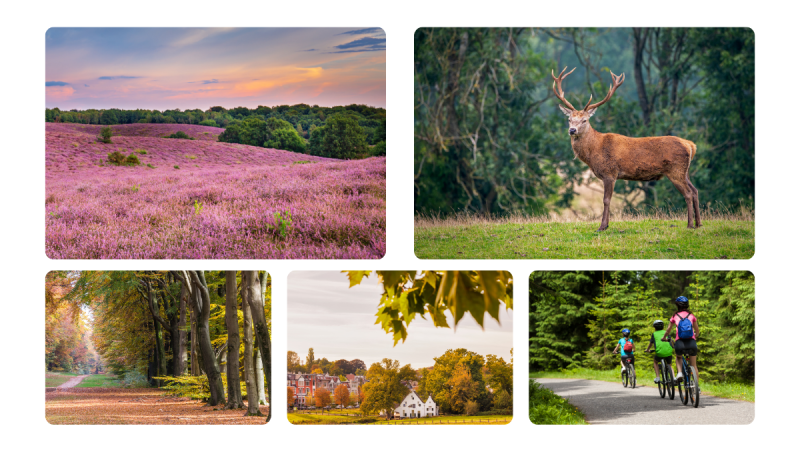
One of the most immediate things assignees notice about Arnhem is how close nature is to the centre. Sonsbeek Park is a short walk from the city — rolling hills, a large waterfall, woodland paths and the kind of green space that genuinely feels like an escape rather than a municipal afterthought.
Twenty minutes by car brings you to the Hoge Veluwe National Park — one of the largest nature reserves in the Netherlands, with 5,400 hectares of forest, heathland and dunes. Bikes are available free of charge inside the park. The Kröller-Müller Museum sits within the park grounds and houses one of the largest Van Gogh collections in the world alongside an exceptional sculpture garden. It is worth visiting early in your stay and returning to more than once.
For culture closer to the city, Arnhem has the Gelders Orkest, the Introdans ballet company, the Museum of Modern Art and the Musis Sacrum — one of the oldest concert halls in the country. The Netherlands Open Air Museum, three kilometres from The Architect, is an expansive 44-hectare site with over 80 historic buildings depicting Dutch life across centuries. It accepts the Museum Card, which is worth acquiring — it gives unlimited access to hundreds of museums across the country and pays for itself quickly.
If you are arriving with family, Burgers' Zoo is one of the finest in Europe. A 45-hectare park with immersive natural habitat environments — rainforest, desert, savannah, coral reef — it is genuinely extraordinary and not just for children. An annual pass makes sense if you are staying for several months.
A city with a history worth knowing
Arnhem carries a particular historical weight that many international arrivals — especially those from the UK, the US and Canada — find unexpectedly moving.
The Battle of Arnhem in September 1944 was one of the most significant and costly Allied operations of the Second World War. British paratroopers fought to hold the bridge at Arnhem while waiting for ground forces that never arrived in time. The operation failed. The city was left shattered, its residents evacuated and the town plundered. When they returned in April 1945 after liberation, they found it in ruins.
The people of Arnhem have never forgotten what was sacrificed here. The annual commemoration ceremony in the nearby village of Oosterbeek — the last redoubt of the British command — draws visitors from across the world. The Airborne Museum in Oosterbeek is one of the most affecting war museums in the Netherlands. Across the Waal River just beyond Nijmegen, the American and Canadian contributions are commemorated separately each year.
Understanding this history is not a requirement for living well in Arnhem. But it adds a layer of meaning to the city that many assignees find deepens their connection to it.
Healthcare, practical registration and getting set up
Getting registered and set up in Arnhem is straightforward for international residents. If you are staying at The Architect, registration at the address is possible — which means you can obtain your BSN number without difficulty. Your BSN is required for almost everything in the Netherlands: opening a bank account, registering with a GP, arranging health insurance. Getting this sorted in the first week makes the rest of the settlement process significantly smoother.
For healthcare, Ziekenhuis Rijnstate is the main regional hospital and one of the largest in the region, with a wide range of specialist services. For day-to-day medical needs, Huisartsenpraktijk Arnhem Centrum is a GP practice that serves international residents. Registering with a GP early is advisable — do not wait until you need one.
Recap of the article
- Arnhem surprises most assignees — compact, walkable, and more liveable than expected
- Serviced apartments (like The Architect) offer a practical first base with BSN registration from day one
- Nijmegen is 20 minutes by train; the two cities work well as a combined corridor
- Strong day-to-day amenities: supermarkets, restaurants and cafés within walking distance
- Nature close by: Sonsbeek Park in the city, Hoge Veluwe National Park 20 minutes out
- Good cultural offer: museums, concert hall, open air museum, Kröller-Müller
- WWII history gives the city an unexpected depth many assignees connect with
- Practical setup is straightforward:GP, hospital all covered
___
Article written by: Claudia Vrancken , Marketing Specialist